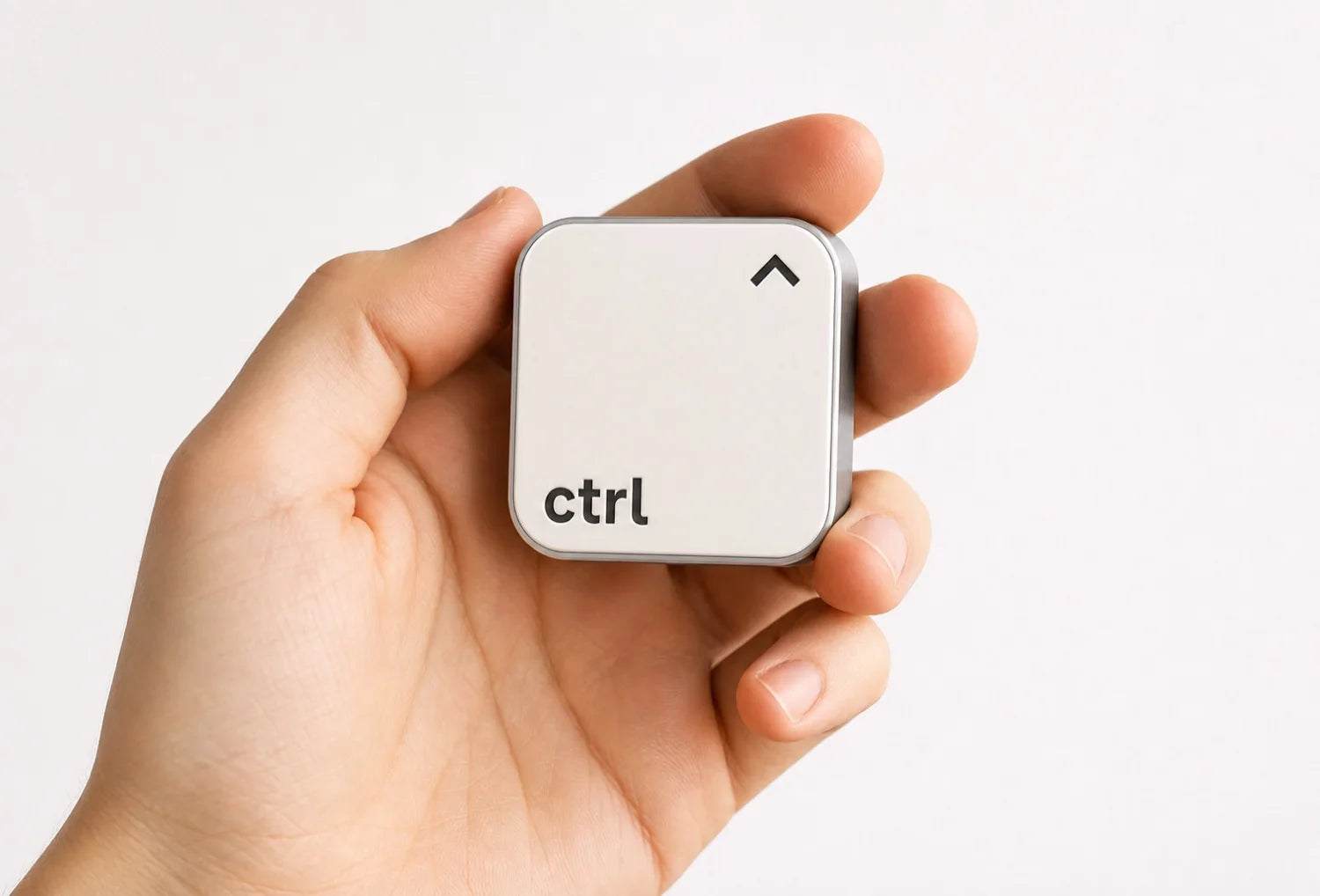


Why willpower alone loses against apps
You can open an app before you have consciously decided what you want there. That is not proof of weak discipline. A useful system changes the moment before the action.
Short answer
Willpower has to catch every impulse; a pre-committed barrier changes the situation itself. In a non-randomized one sec field study, completed openings of selected apps were 57 percent lower after six weeks among 280 users who remained active throughout.
- Evidence: The intervention combined delay, reflection and an option to cancel.
- Limit: Self-selected cohort, no randomized comparison and no test of BACK TO CTRL.
- Practical takeaway: Concrete if-then plans reduce how much depends on motivation in the moment.
Motivation changes, triggers remain
Many digital products remove stopping points, while a resolution has to catch every single impulse. That makes willpower a fragile single line of defense. The more practical question is how to change the environment around the automatic action.
A deliberate pause can change behavior
In a six-week, non-randomized field study of a self-selected cohort, 280 continuously active one sec users completed 57 percent fewer openings of selected target apps in the final week than in the first. The tool combined a brief delay, a reflection prompt and an option to cancel. The study tested one sec, not the ctrl key, and it did not measure total screen time.
Plans beat vague intentions
Research on implementation intentions supports specific if-then plans better than a general resolution. Habits also do not follow a universal number of days. They often take weeks or months and vary greatly between people and behaviors.
A system is not a miracle cure
A randomized three-week reduction trial found better values across several wellbeing measures while use was limited, followed by a rebound toward earlier use after the intervention. The honest lesson is not that one tool solves the problem forever. It is that decisions made in a calm moment can be supported by friction, routines and clear boundaries later.
Sources
- Grüning, Riedel and Lorenz-Spreen (2023), non-randomized one sec field study. Primary source
- Pieh et al. (2025), randomized three-week smartphone-use reduction trial. Primary source
- Bélanger-Gravel et al. (2013), meta-analysis of implementation intentions. Primary source