
Less screen time: what controlled studies show
Less smartphone time can be more than a good feeling. But stress, sleep, wellbeing and biological markers are different outcomes and need to be assessed separately.
Short answer
Less smartphone time can improve measurable health outcomes in the short term, but the evidence is not equally strong for every outcome. In a randomized trial with 111 students, stress, depressive symptoms, sleep quality and wellbeing improved after three weeks, with small-to-medium effects.
- Evidence: Device-recorded use in the intervention group fell by about 155 minutes a day.
- Limit: Use returned after the limit ended; a five-day Facebook experiment produced mixed cortisol and life-satisfaction results.
- Practical takeaway: Protected time windows are more defensible than promises of a permanent detox effect.
The strongest card: a real randomized trial
In 2025, BMC Medicine published a non-blinded randomized controlled trial with 111 healthy Austrian students aged 18 to 29 who had used their smartphone for at least three hours a day at baseline. Fifty-eight were assigned to use it for no more than two hours a day for three weeks; 53 continued as usual. Screen-time screenshots were uploaded weekly.
The intervention group reduced smartphone use by about 155 minutes a day and showed small-to-medium improvements in stress, depressive symptoms, sleep quality and wellbeing. Those are results of this specific short trial, not a promise about every person or about BACK TO CTRL.
The rebound matters
The between-group difference in smartphone time was still present six weeks after baseline, but not from week seven onward. Use moved rapidly back toward its earlier level once the active restriction ended. That makes the study more useful, not less: a short challenge can create change, but it does not automatically redesign the routine that follows.
Cortisol: a mixed five-day experiment
In 2018, researchers assigned 138 active Facebook users either to five days without Facebook or to normal use. The no-Facebook group had lower salivary cortisol afterward, but also lower life satisfaction. This mixed result matters. It tested one social platform for five days, not all smartphone use, and it does not support a simple “less phone equals a happier body” claim.
Sleep: where use happens matters
A Norwegian survey of nearly 39,000 students found that every additional hour of in-bed screen time was associated with 59 percent higher odds of insomnia symptoms and 24 minutes less sleep. These are associations, not causal risk estimates.
A second study objectively tracked screen use and sleep among 79 adolescents across 323 nights. Total use in the two hours before bed was not consistently associated with poorer sleep. The clearer pattern appeared for use in bed, especially interactive use. This argues against a blanket evening rule and for testing a more specific boundary: keeping the bed screen-free.
What this means for you
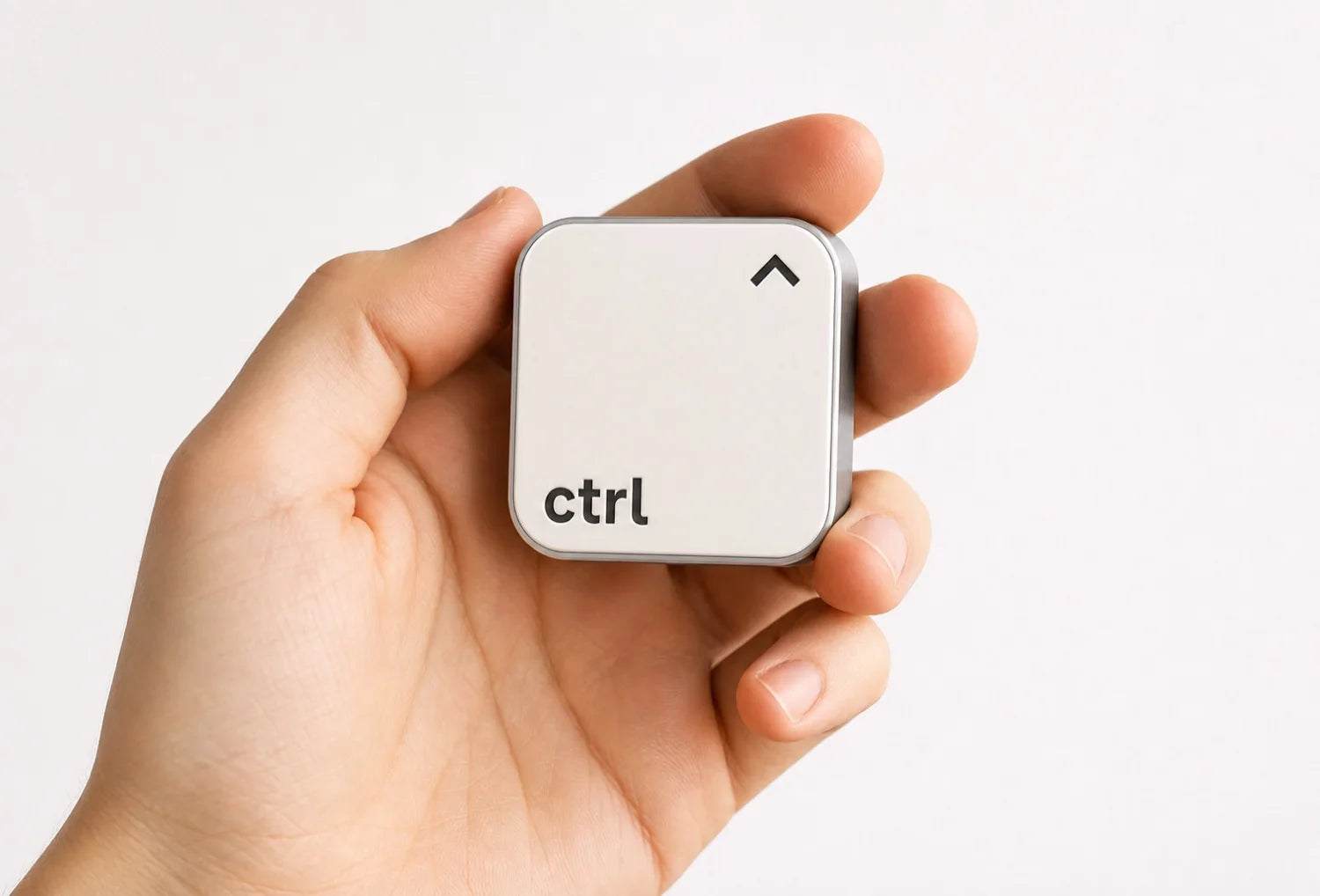
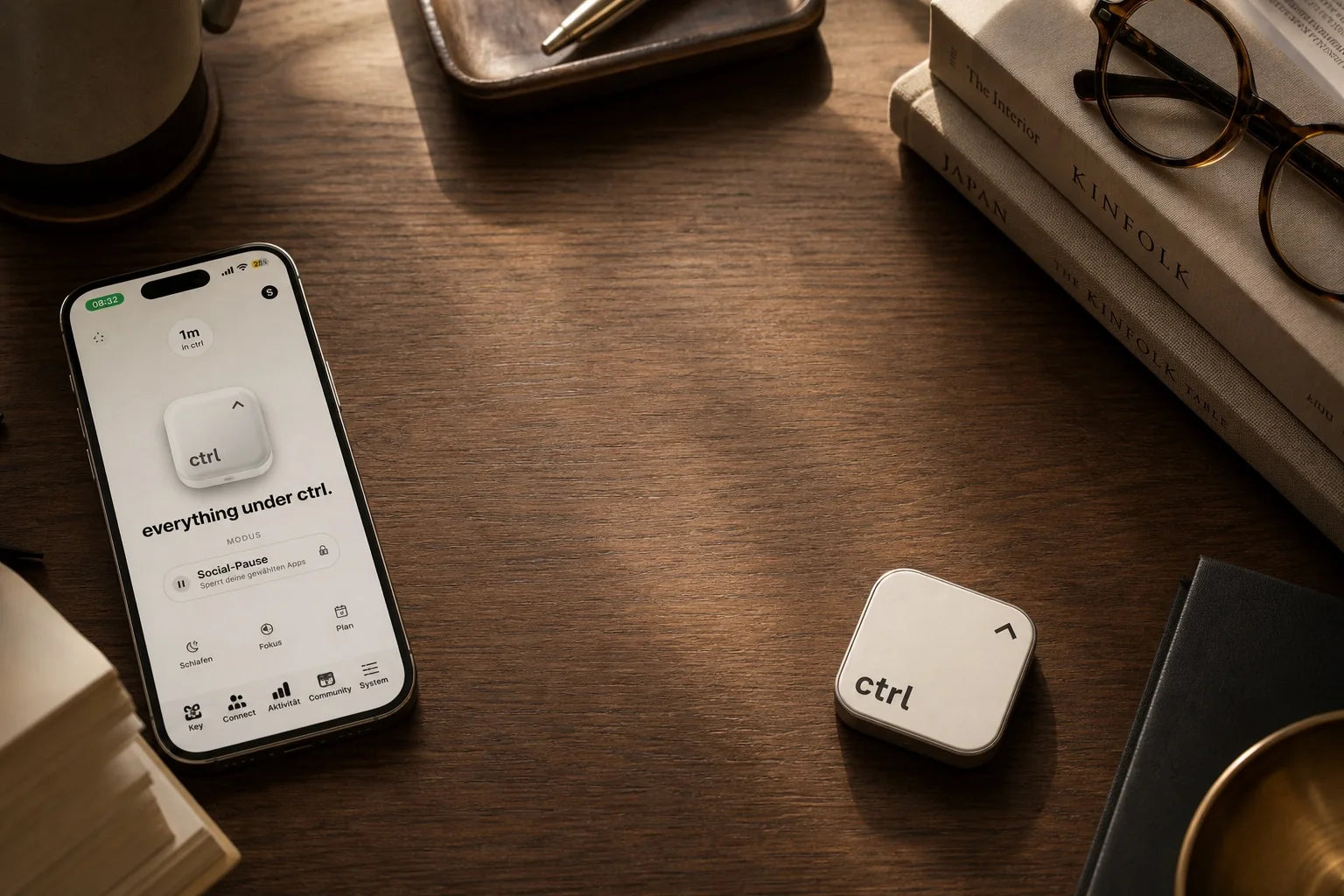
You do not need to copy either radical intervention. The research supports testing clear boundaries and measuring what happens; it does not prove that any particular protected window or product will produce the same health outcomes. The ctrl key is designed to make selected boundaries easier to repeat. All numbers with sources live in our research library.
Sources
- Pieh et al., randomized smartphone reduction trial, 2025, n = 111. doi.org
- Vanman, Baker and Tobin, five-day Facebook abstinence experiment, 2018, n = 138. doi.org
- Brosnan et al., objective screen-use and sleep measurement, 2024. doi.org
- Hjetland et al., in-bed screen use and sleep among Norwegian students, 2025. doi.org