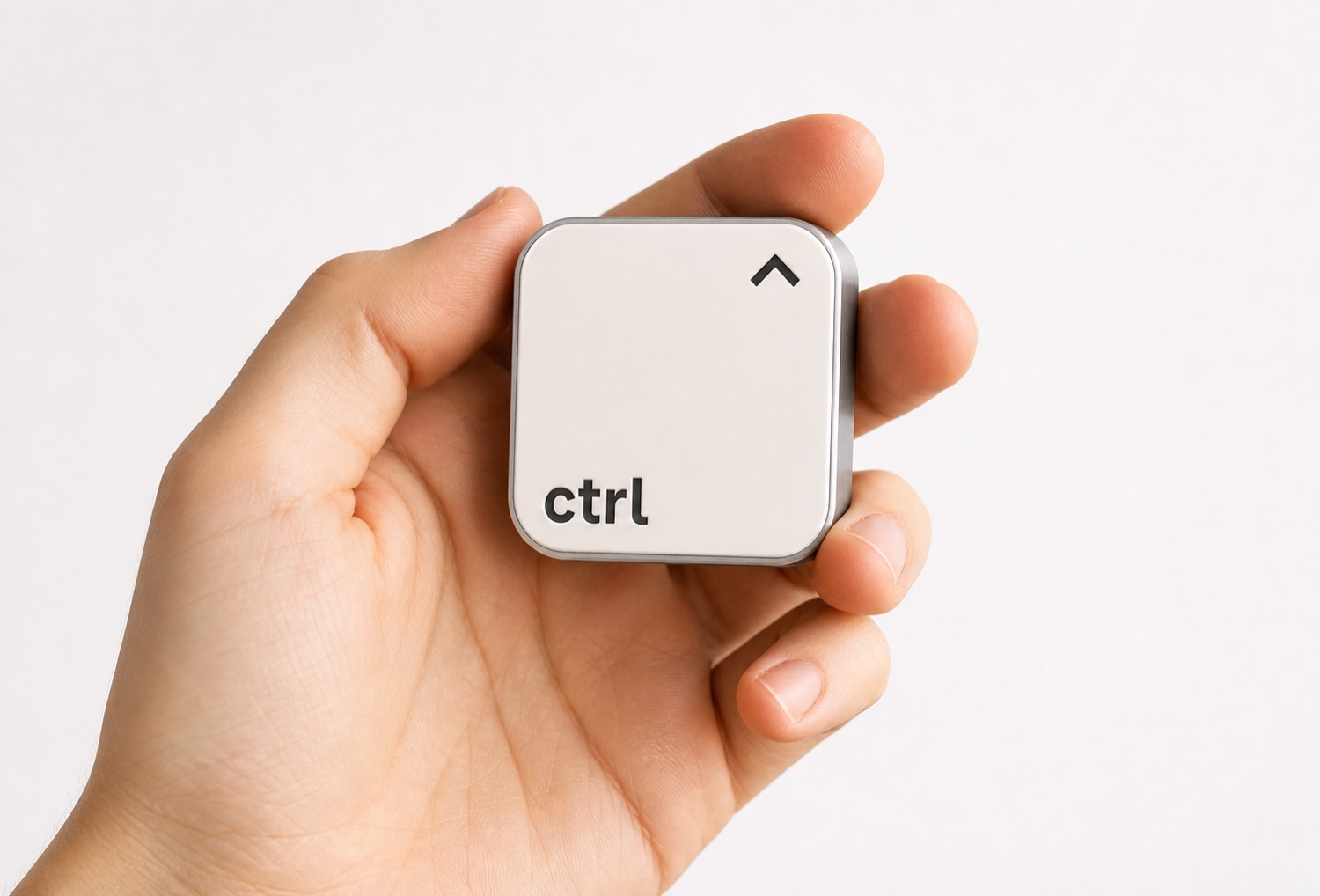
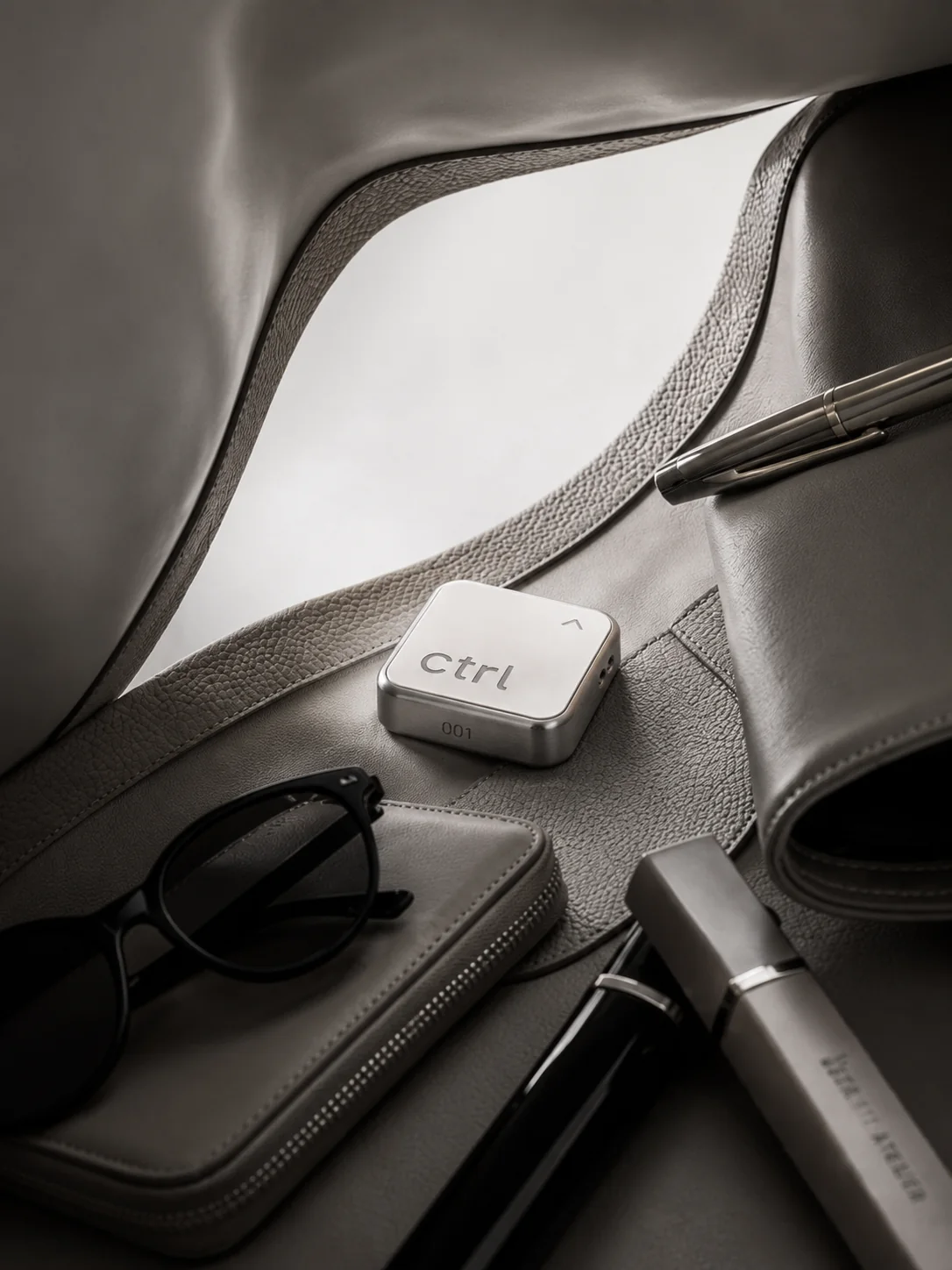
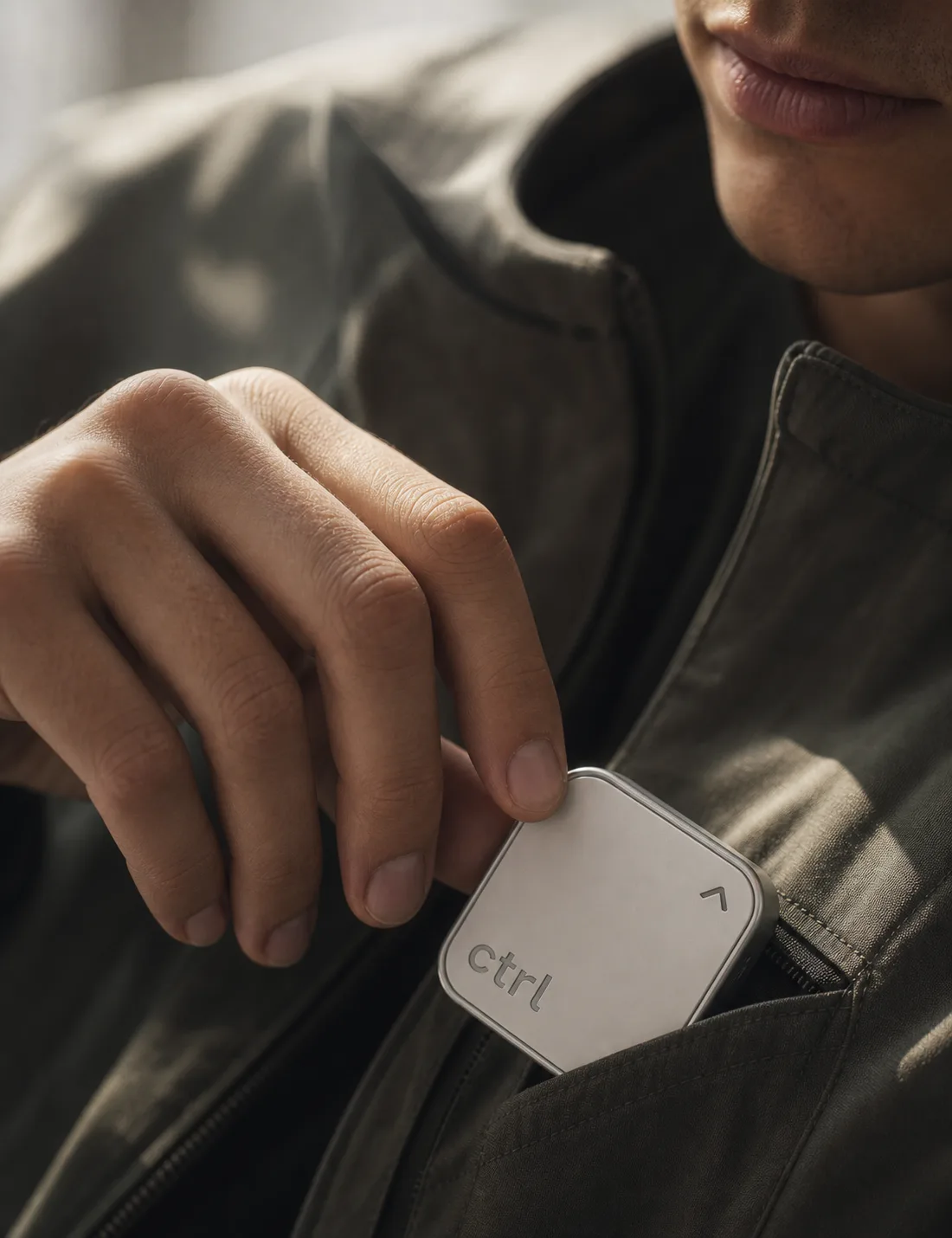
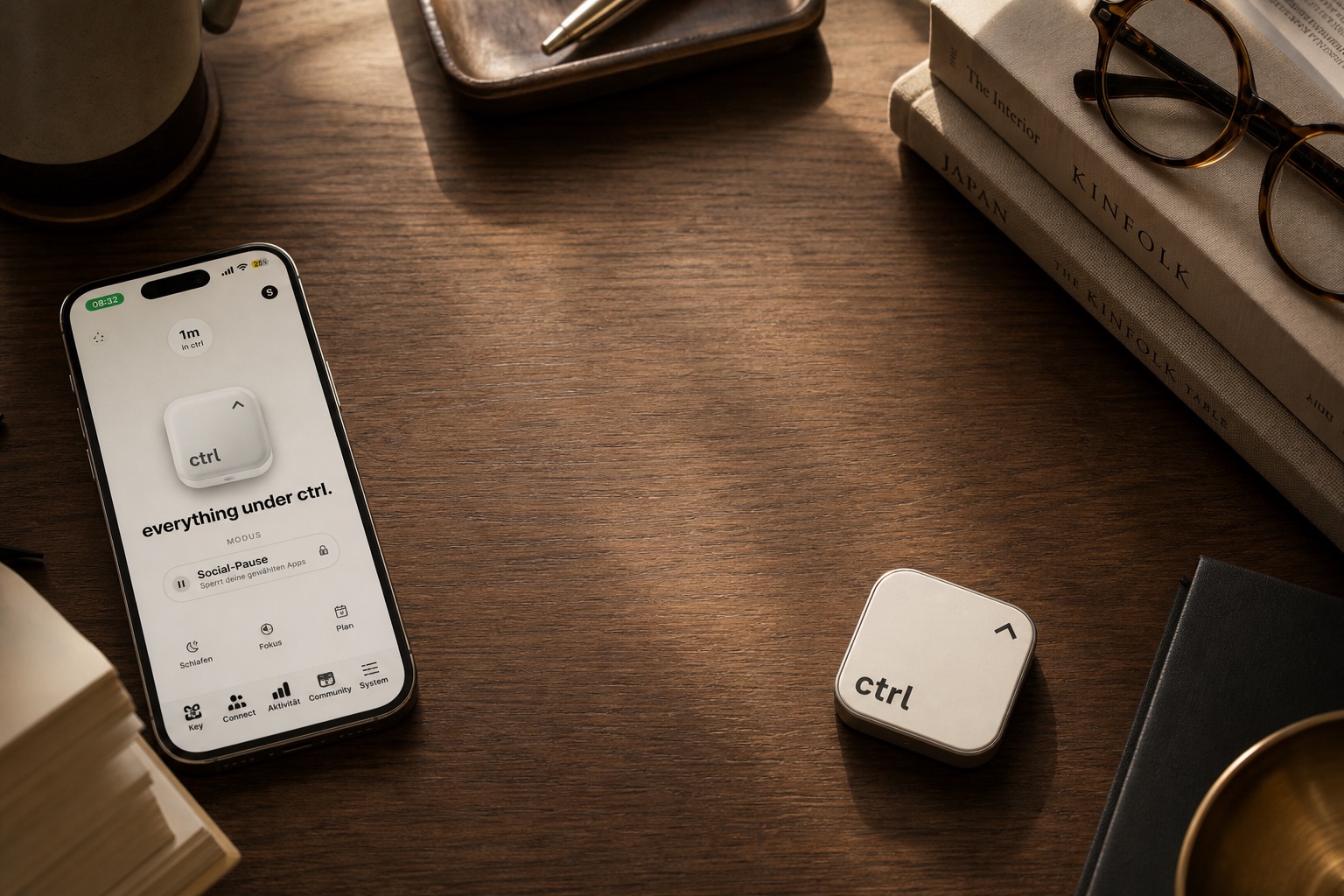
One tap on the Key and the loud apps go quiet. No willpower fight, no bargaining with yourself every ten minutes. You decide once. The morning is yours to build.
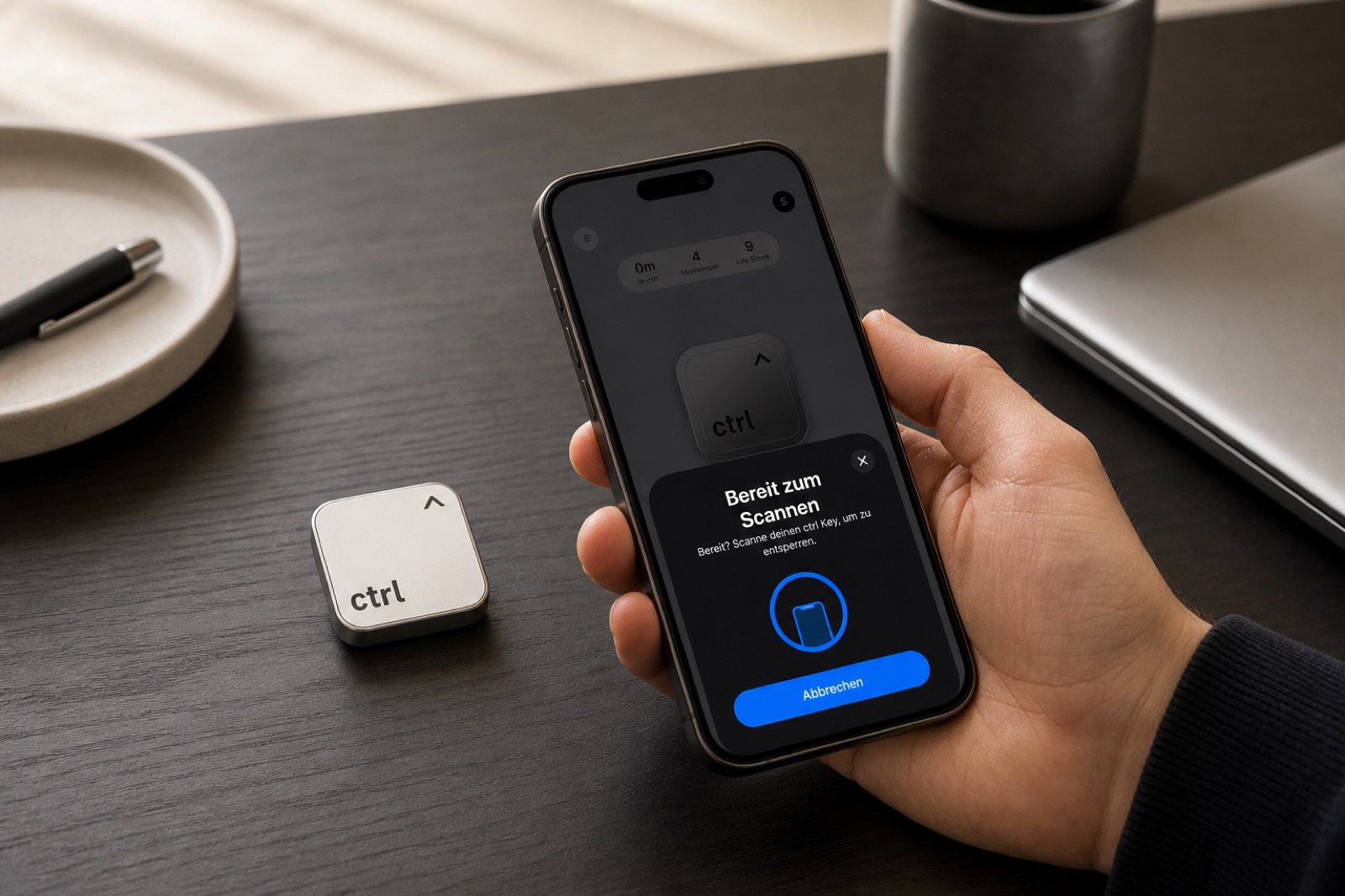
Modes
A Focus mode is your own profile. You choose which apps lock and which stay open. Mail can stay, the feeds go quiet, your music keeps playing. Build it once in the app, then forget the settings forever. From that day on, the Key is the only switch.
Every guard is optional. You choose how strict your ctrl is.
Loophole Guard
Any rule you can undo in three taps is just a suggestion. Loophole Guard closes the side doors: a settings lock so your rules cannot be quietly edited, a wait gate that puts real minutes between impulse and exception, and strict shields that keep a locked app locked. Decisions made in daylight, kept through the night.
The Key in the room
Willpower is a fight you have to win every few minutes. Distance wins it once. The Key lives on the desk, in plain sight, and unlocking means standing up, walking over and holding your phone to a piece of aluminum. Most of the time, that short walk is the whole answer. The phone stays a tool. The room stays quiet.
That is the entire trick: not a stronger you, a calmer room.
What the research says
of participants improved their wellbeing, mental health or objectively measured attention after two weeks without mobile internet on their smartphone.
Randomized two-week trial · Castelo et al., PNAS Nexus 2025
That is how much extra time people in a field study took to get back to focused work after an alert interruption. One ping is never just one ping. A quiet phone gives you those minutes back, block after block.
Your attention is not broken. Your environment got louder.
A large meta-analysis found no decline in attention performance itself.3 The distraction is linked with what surrounds you, not with what is wrong with you. ctrl simply turns the environment back down.
1 Castelo et al., PNAS Nexus, 2025. Randomized controlled trial: participants blocked mobile internet on their smartphones for two weeks. 90.7 percent improved on at least one of the three measured outcomes: subjective wellbeing, mental health, or objectively measured sustained attention. Source↗
2 Iqbal and Horvitz, 2007. Field study of knowledge workers: after responding to email and messenger alerts, participants took roughly 10 to 15 additional minutes to return to focused work on the interrupted task.
3 Andrzejewski et al., 2024. Meta-analysis of attention test performance over time, finding no evidence of a general decline. All findings describe study groups and are linked with, not a promise of, any individual result.
Secure payment · 30 day money back