
a day on the smartphone. That is what adults in Germany report about themselves, and the trend points up, from 150 minutes in 2024 to 180 today. People aged 16 to 29 report 216 minutes.
Bitkom (2026)1
Research and science
Every claim on this site has to earn its place. This page keeps the receipts. Only published findings, always with year and source. Correlation is never dressed up as causation. When new research lands, this library gets updated. When a claim does not survive, it gets retired.
Pillar 01 · Time
The baseline numbers for Germany. Measured where possible, and clearly marked when people report about themselves.
a day on the smartphone. That is what adults in Germany report about themselves, and the trend points up, from 150 minutes in 2024 to 180 today. People aged 16 to 29 report 216 minutes.
Bitkom (2026)1
a day, measured in the logs of 625 Android users in Germany, along with 58 pickups. Over 90 percent of sessions last under 7 minutes. The day rarely disappears in one sitting. It disappears in fragments.
Tóth et al. (2025)2
of 18 to 24 year olds in Germany say their own use is too high, and 93 percent of that group report negative side effects. Across all adults, 46 percent check the phone right after waking.
Deloitte Deutschland (2024)3
Ask people, then check the devices, and the reported numbers sit lower. Adults in Germany report about 180 minutes while measured logs record 245. Different samples, same lesson. That is why this page prefers measured data wherever it exists.
Bitkom (2026)1 · Tóth et al. (2025)2
Pillar 02 · Focus
What field studies say about interruptions, and the one randomized trial that shows attention recovering when the pull pauses.
of participants improved in at least one of three outcomes when mobile internet was blocked on their phones for two weeks. Wellbeing rose, mental health improved, and sustained attention got objectively better. It is the only randomized trial of its kind so far, and the strongest single result in this library.
Castelo et al., PNAS Nexus (2025)4
A meta-analysis of the d2 test of attention pooled 287 samples from 32 countries, about 21,000 people. It found no drop in attention performance in children and moderate gains in adults. Your focus is not broken. Your environment got noisier.
Andrzejewski et al. (2024)5
Interrupted work often still gets finished on time. People compensate by speeding up, and pay with significantly more stress, frustration, time pressure and effort. The cost was measurable after just 20 minutes of interrupted work.
Mark, Gudith and Klocke (2008)6
When a task stays mentally open, part of your attention stays behind with it and performance on the next task drops. A short note on where to resume eases the effect. Closed loops are not a luxury. They are how focus works.
Leroy (2009) · Leroy and Glomb (2018)7
Pillar 03 · Sleep
Nowhere is the picture more consistent than around sleep. It is still largely correlational, and we treat it that way.
Meta-analyses keep finding the same association. More electronic media use is linked with poorer sleep quality and more sleep problems. Sleep is the best documented area in this whole field, which is why evenings are where ctrl earns its keep.
Han et al. (2024) · Ahmed et al. (2024)8
of teenagers in Germany say they are often tired in the morning because they were on their phone late at night. Not a lab finding, a yearly national survey, and one of the clearest everyday signals in the German data.
JIM-Studie, mpfs (2025)9
People who sleep badly may also reach for the phone more, so most sleep findings run in both directions. We phrase every sleep claim on this site as an association, and we would rather lose a headline than your trust.
Our reading rule
Pillar 04 · Presence and what works
The evidence behind ctrl itself. Friction, commitment, plans made in advance, and why software alone rarely holds.
Patterns of use that feel out of your control show stronger links with depression, anxiety, sleep problems and lower wellbeing than sheer duration does. Not every minute is equal. That is why ctrl aims at control, not at zero.
Huang (2022) · Shannon et al. (2022)10
fewer actual app openings after six weeks of added friction, in a field experiment with 280 people. This is the honest case for a key that adds one deliberate step. Friction works, measurably, and the effect is moderate rather than magic.
Grüning, Riedel and Lorenz-Spreen, PNAS (2023)11
of self-control and digital health apps are abandoned within the first 100 days, the median across studies. Willpower wrapped in software rarely holds. It is the strongest argument we know for a physical object that sits in the room with you.
JMIR Scoping Review (2024)12
is how long new habits took to form in everyday life, on average and with a wide personal range. Anyone promising transformation in three weeks is selling something. We design for the long, quiet middle.
Lally et al., UCL (2009) · Singh et al. (2024)13
is the meta-analytic edge of if-then plans over vague intentions. And decisions made before the moment of temptation win far more often than decisions made inside it, which is exactly what commitment devices are for. A ctrl session is set up in advance and ends on your terms, not in the scroll.
Bélanger-Gravel et al. (2013)14 · Ariely and Wertenbroch (2002)15
Honesty first
Some popular claims sell well and do not survive contact with the research. You will not find them anywhere on this site.
A marketing meme from 2015. No study ever measured the famous 8 seconds, in humans or in goldfish. We only quote research that exists.
The vending machine picture of the brain is a story, not a finding. We leave neurochemistry to the people who measure it and talk about behavior instead.
The research says about 66 days on average, with a wide personal range.13 We would rather set an honest expectation than a catchy one.
No such diagnosis exists for phones or social media. Formal diagnoses of that kind cover only gambling and gaming, which is why that word never appears in our writing about phones.
The evidence about mornings is thin. The strong evidence is about screens late at night. We build for what holds, not for what frightens.
A living page
Research moves, and so does this library. New studies are added regularly, numbers get updated, and weak claims get retired. When something important lands, we write about it.
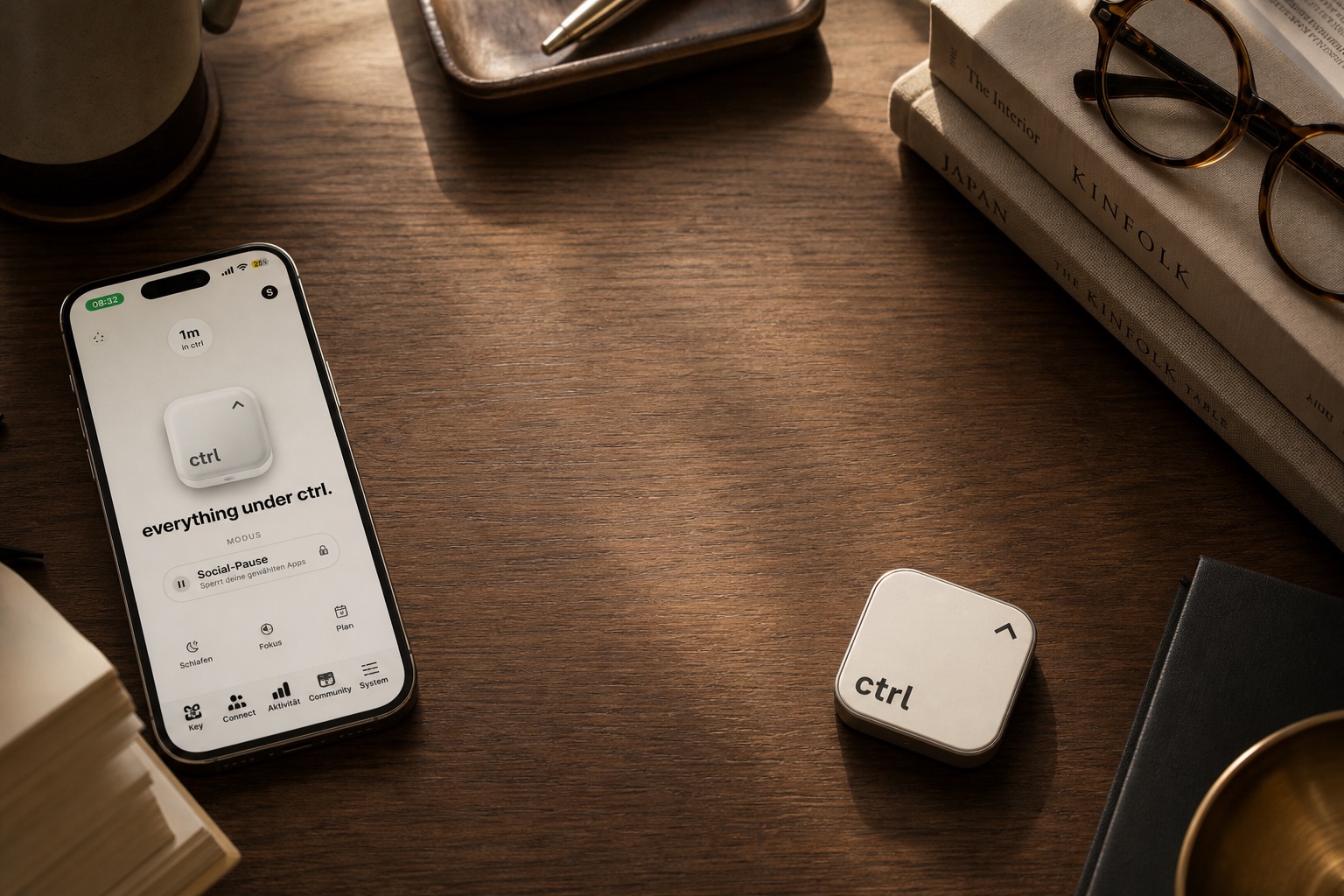
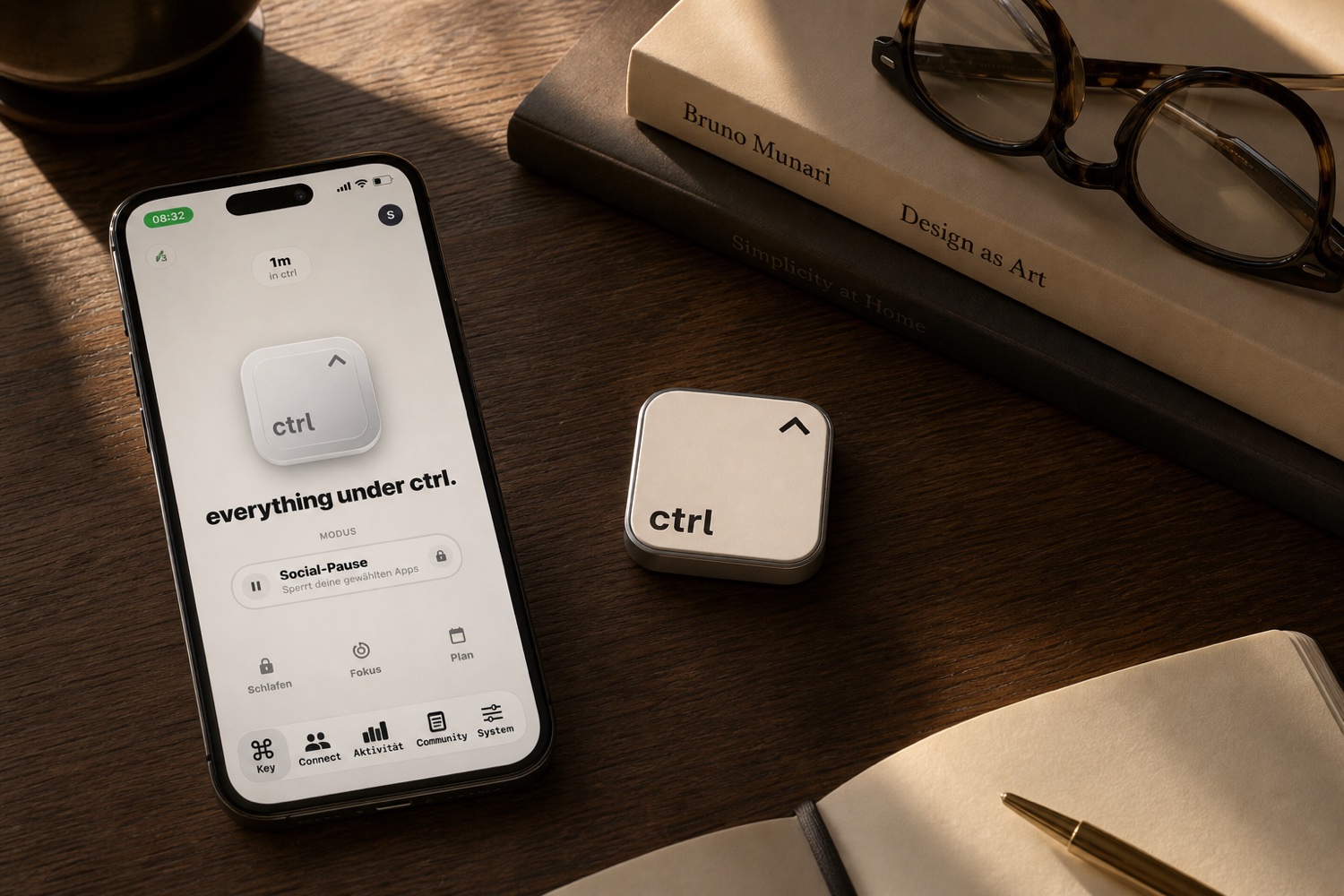
Modes, streaks, friends and family, and what stays free. The research above is why the app works the way it does.
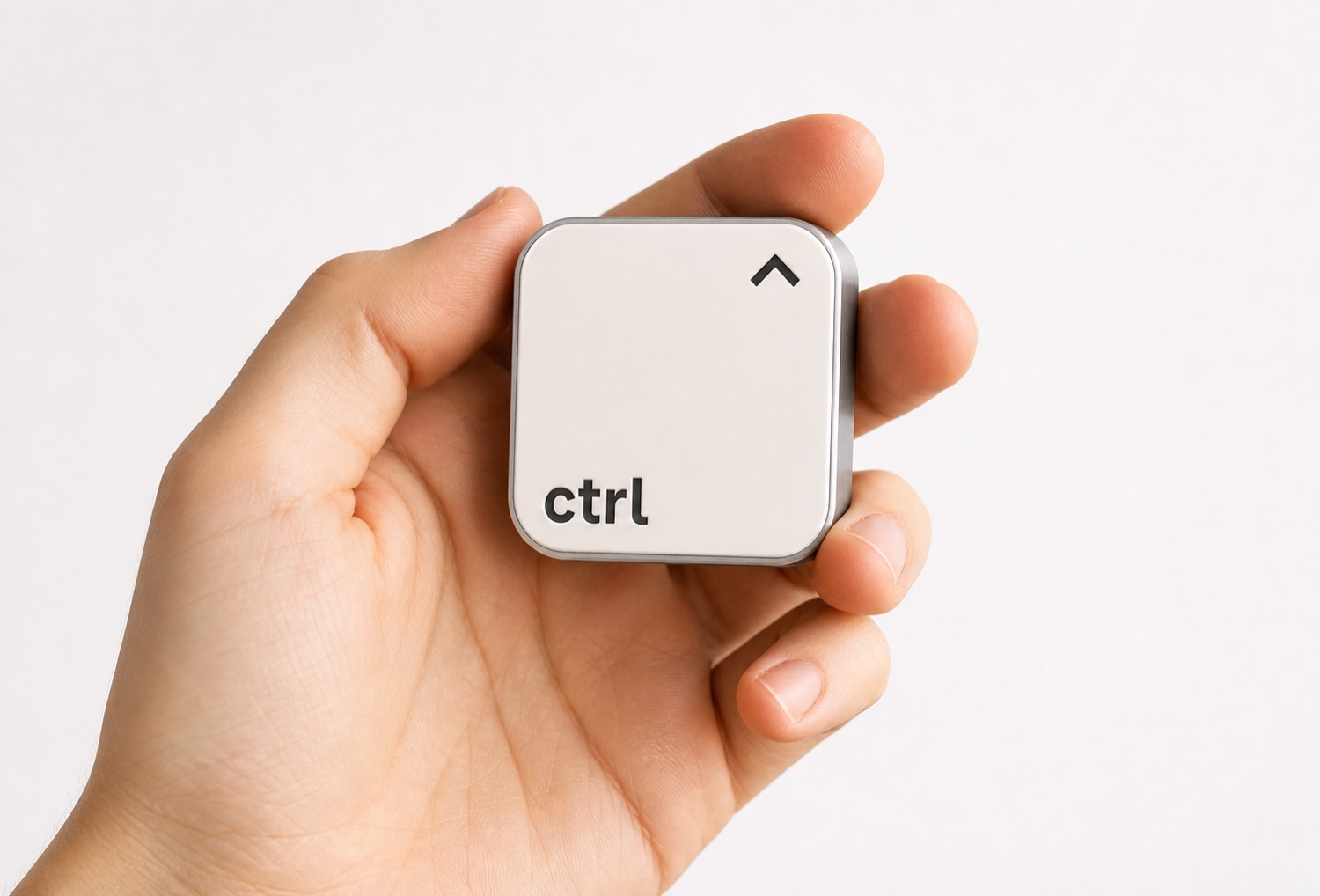
Explore the app → The KeyA numbered piece of aluminum and ceramic that turns good intentions into one deliberate tap. No battery, nothing to charge.
Pre-order the Key →Where research is correlational we write linked with, not caused by. We do not round numbers in our favor, and when the honest answer is that an effect is moderate, we say moderate.
Secure payment · 30 day money back